Pleasure By Design, Pippa's Intimate Spaces
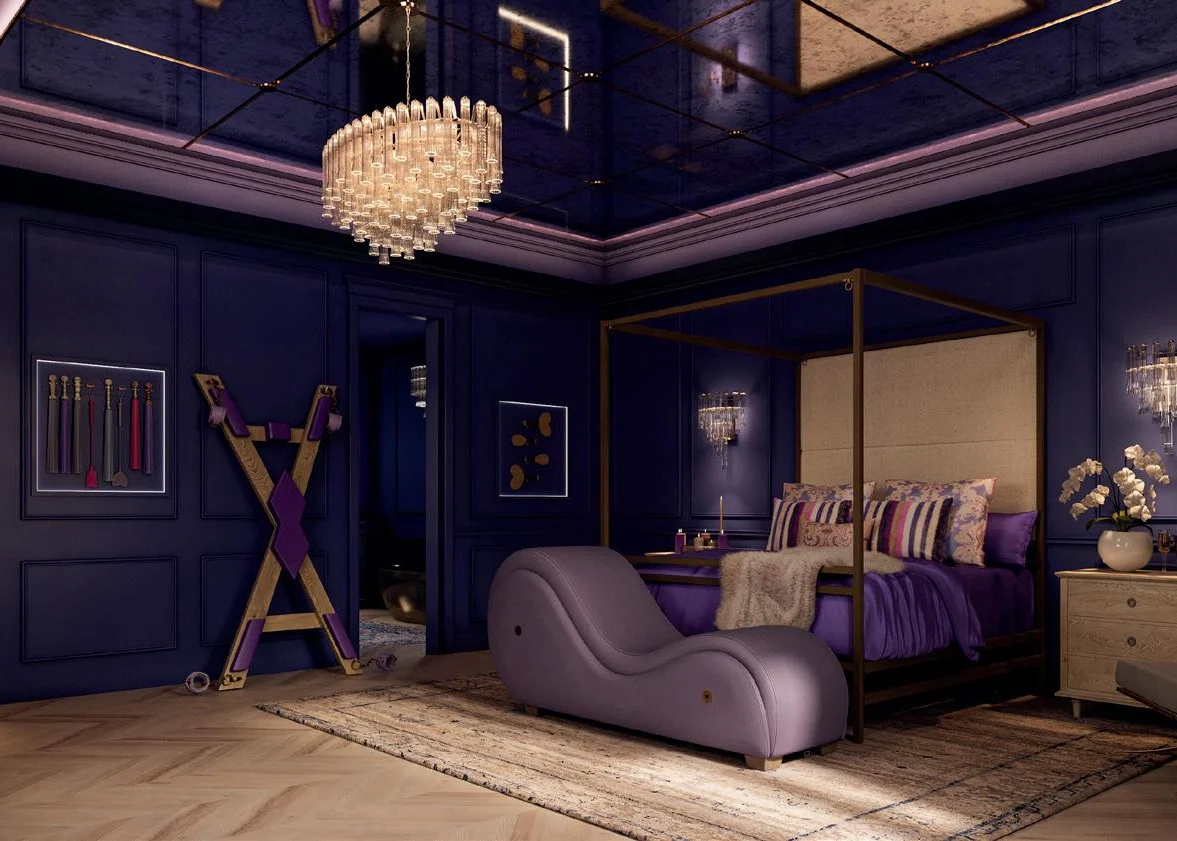
What Happens When Interior Design Meets Desire?
My Conversation with Pippa from Intimate Spaces
Every now and again, someone comes onto Talking Kinky with an idea that makes me wonder why I hadn't really thought about it before.
My conversation with Pippa from Intimate Spaces was one of those.
We spend an extraordinary amount of time thinking about the spaces in which we live. We agonise over kitchens, bathrooms, sofas, lighting, paint colours and whether the cushions match the curtains. But when it comes to intimacy, sex and pleasure, an enormously important part of many people's lives, most of us simply accept whatever space happens to be available. Usually, the bedroom. Perhaps with the door locked. Pippa has taken a rather different view.
She creates beautifully designed intimate spaces specifically intended for pleasure, exploration and play.
And having spoken to her, I think the really interesting thing about Intimate Spaces is that this isn't simply about putting some restraints on a bed and painting the walls black.
It's about designing for intimacy.
Suggested image: One of Intimate Spaces' strongest full-room images
The Room Is Part of the Experience
One of the things I found fascinating during our conversation was the idea that our surroundings have a much greater influence on how we feel than perhaps we appreciate. Lighting changes a mood. Texture changes how something feels. Music changes an atmosphere. Scent can evoke extraordinarily powerful memories and emotions. Privacy allows us to behave differently. And good design can give us permission to leave the everyday world at the door. Intimate Spaces deliberately brings those things together. The company describes its approach as designing for the senses, sight, sound, smell and touch, rather than simply decorating a room. That distinction really stayed with me.
Because whether someone is deeply involved in kink or simply wants to create somewhere a little more sensual with their partner, the principle is exactly the same:
the environment matters.
And No, It Doesn't Have to Look Like a Dungeon
I suspect this is where some people will have completely the wrong mental image. Mention a purpose-built playroom and it's very easy to imagine a rather clichéd collection of chains, red velvet and black leather. And I'm sure that if that's your fantasy, Pippa could probably create something spectacular around it. But what impressed me about her approach was the opposite.
An intimate room can be beautiful.
It can be sophisticated. It can complement the rest of an extraordinary home. It can be discreet enough that someone walking into it might initially have absolutely no idea what the room was designed for. And then things start revealing themselves. Hidden storage. Bespoke cabinetry. Furniture designed specifically for the people using it. Lighting that completely transforms the room. Doors that don't necessarily look like doors. Technology, sound and practical details incorporated into the architecture rather than added as an afterthought. Intimate Spaces offers everything from bespoke furniture and cabinetry to smart-controlled lighting, curtains and speakers, soundproofing, hidden doors and storage, curated toys and accessories and even custom fragrances created for the space.
That is a very different proposition from simply buying some equipment online and finding somewhere to put it.
Suggested image: A detail shot showing furniture, lighting or a discreet design feature
Designing Around You, Not Around Kink
Perhaps the most important part of Pippa's philosophy is that there isn't really such a thing as a standard intimate space. Nor should there be. What excites one person might leave another completely cold. Some people want restraint. Some want sensory play. Some want voyeurism. Some want luxury. Some want somewhere playful. Some want somewhere romantic. Some want a room that allows them to explore a side of themselves that doesn't exist anywhere else in their lives. And some may not yet know exactly what they want. That is why Intimate Spaces begins by understanding the people who are actually going to use the room. Their service uses a detailed questionnaire to develop what they describe as a client's “pleasure profile”, around which the design can then be developed. I love that idea.
Because ultimately this isn't designing a sex room.
It's designing your sex room.
There's quite a difference.
The Luxury of Not Having to Explain Yourself
There was another aspect of this which I think matters enormously. Discretion. For many people, commissioning an interior designer is relatively straightforward. You can comfortably tell someone that you'd like a dressing room, a wine cellar, a cinema room or a home gym. It takes a rather different conversation to explain that you'd like a beautifully upholstered piece of furniture which also happens to accommodate restraint points. That's where someone like Pippa becomes particularly interesting. You aren't having to translate your desires into socially acceptable interior-design language. You're talking to someone who already understands why you're creating the space in the first place. There is something wonderfully liberating about that. And Intimate Spaces takes the concept well beyond residential bedrooms. The studio is based in Oxfordshire but works internationally, creating spaces for private homes, hotels and clubs, while offering a complete service from design and procurement through to installation, assembly and final styling.
In other words, you can hand them an empty room and ultimately walk back into a finished experience.
Suggested image: Another dramatic room shot, ideally visually very different from the first
What I Took Away From My Conversation with Pippa
We started Talking Kinky because I'm endlessly fascinated by the enormous world that sits behind that one small word, kink. And what repeatedly becomes apparent through these conversations is that kink isn't simply about what people do. It's about psychology. Relationships. Identity. Trust. Communication. Design. Technology. Art. And, in this case, architecture and interiors. My conversation with Pippa made me look at something as familiar as a bedroom slightly differently. Why shouldn't we design a room around pleasure? We happily create rooms dedicated to cooking, watching television, working, exercising and entertaining friends.
Some people have cinema rooms.
Some have games rooms.
Some have wine rooms.
So perhaps the more interesting question isn't:
“Why would somebody have an intimate playroom?”
Perhaps it's:
“Why wouldn't they?”
Meet Pippa on Talking Kinky
Pippa joins me for Episode 1 of Season 13 of Talking Kinky, where we explore the thinking behind Intimate Spaces, what goes into creating these extraordinary rooms and what happens when interior design meets human desire. If you've ever contemplated creating your own play space, or you're simply fascinated to discover what goes into designing one, I think you'll enjoy this conversation. And if the episode plants a few ideas of your own, you can explore Pippa's work and find out more about Intimate Spaces here:
https://www.intimatespaces.co.uk/
Be warned. You may never look at your spare bedroom quite the same way again.
Tom
Talking Kinky